
IndependentAlternative Investment
Debt
Specialist fixed income strategies built on disciplined focus and institutional-grade execution across global credit markets.
Venture
Dedicated venture funds pairing institutional backers and domain expertise with builders transforming critical industries at the frontier.
Who we are

The outback windmill taps unrecognised value and delivers sustainable performance in challenging environments.
Artesian is a global alternative asset manager specialising in debt and venture capital. We invest where expertise, agility and insight outperform scale, providing institutional investors disciplined access to credit markets and high-growth venture opportunities in sectors and geographies where inefficiencies create advantage.
We manage capital on behalf of government organisations, pension and superannuation funds, corporations, wealth managers and family offices. With nine offices across five countries, we combine global perspective with an Asia-Pacific focus, connecting institutional capital to the region's most significant opportunities.
Artesian is part of a global community using business as a force for good, balancing profit with positive impact for people, communities and the environment.

Artesian is committed to incorporating responsible investment principles into our investment decision-making and ownership practices across all strategies.
By the numbers


















Global Perspective Asia Pacific Focus
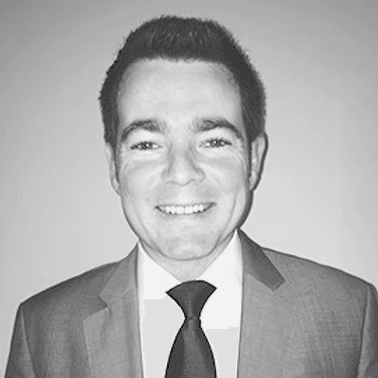
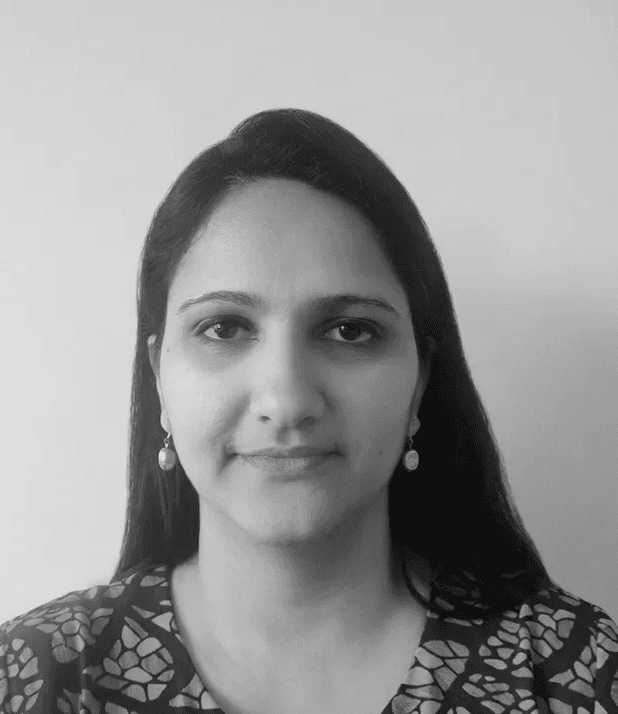
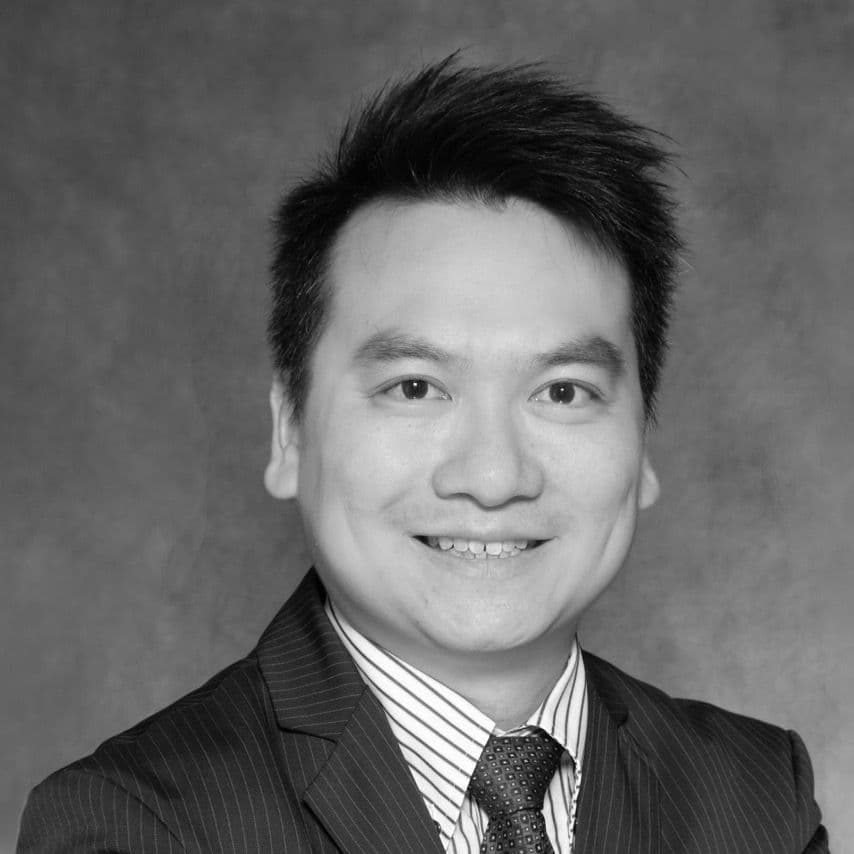
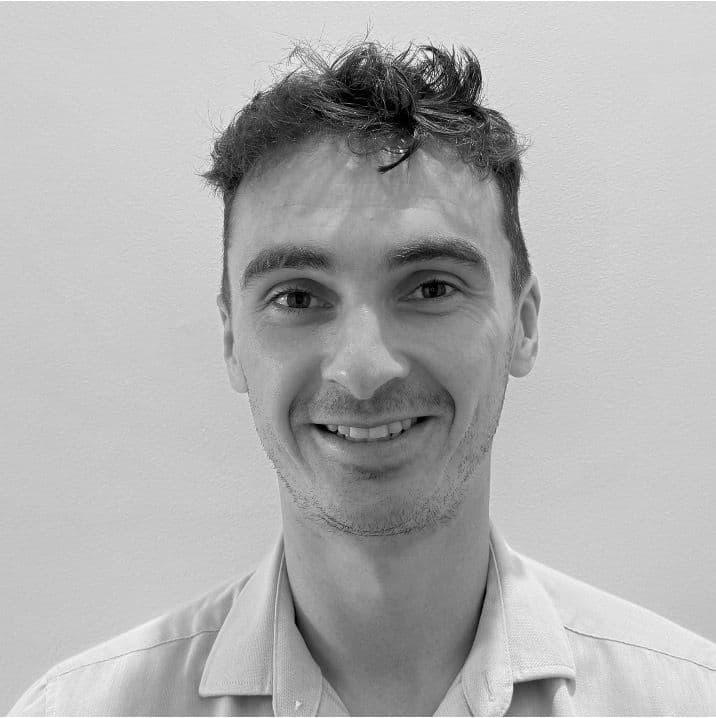
Our people









































Frequently asked questions
What Artesian is
What is Artesian Capital Management?
+
Artesian Capital Management is a global alternative asset manager founded in Sydney in 2004, running specialist debt and venture platforms across the Americas, Europe and Asia Pacific.
The two are not managed alike. Debt prioritises capital preservation and income by pricing credit, duration, liquidity and structure. Venture accepts illiquidity and deeper uncertainty in pursuit of outlier returns. Each platform keeps its own team, governance and portfolio construction.
What unites them is a view of where active management earns its place: markets where risk is mispriced, structure matters and specialist judgement can outperform scale.
Link to this answerHow large is Artesian, and where does it operate?
+
Artesian manages $1.5 billion across its venture and debt platforms, with more than 40 people in nine offices across five countries: Sydney, Melbourne, Adelaide, Perth, Shanghai, Singapore, London, New York and Austin. The firm has been investing since 2004.
That network is operating infrastructure rather than geographic coverage. It gives Artesian local sourcing, market knowledge and execution capability in the places it invests, and connects institutions, portfolio companies and commercial partners across regions.
Since 2010, Artesian's venture strategies have backed more than 600 companies. What that produces is not simply a large portfolio, but a deep base of investment experience, company data and relationships every mandate can draw on.
Size here is a means rather than a claim. Artesian invests where expertise, agility and insight outperform scale, and the footprint exists to reach segments and companies that larger pools cannot.
Link to this answerIs Artesian regulated?
+
Artesian operates through regulated entities in each of its principal jurisdictions and supplements that regulatory oversight with independent operational assurance and internal governance.
In Australia, Artesian Venture Partners Pty Ltd holds AFSL No. 284492. Artesian Capital Management Pty Ltd is a corporate authorised representative (No. 339915) of Artesian Funds Management Pty Ltd, which holds AFSL No. 259457. Separate Artesian entities are registered with the Securities and Exchange Commission in the United States, authorised by the Financial Conduct Authority in the United Kingdom and licensed by the Monetary Authority of Singapore. The relevant entity, and any fund-specific issuer, responsible entity or investment manager, is identified in each fund's offering documents.
Regulatory authorisation permits a manager to conduct its business; operational assurance tests how that business is run. Artesian undergoes an annual independent review under ASAE 3000 against the Australian Institute of Superannuation Trustees' Investment Manager Operational Due Diligence Guidance Note, the standard superannuation funds apply to the managers they allocate to. The guidance sets a full review every three years; Artesian is reviewed annually. It covers governance, risk management, investment and operational processes, valuations, cyber security, business continuity, service provider oversight and reporting.
This is supported by a Compliance, Risk and Audit Committee covering the company, its management and its funds; a dedicated Valuation Committee; documented investment committee authorities; segregation of duties; annual audits; and policies governing conflicts, personal trading, fraud, AML/CTF, valuation and responsible investment.
Regulatory status and disclaimersLink to this answerHow Artesian invests
What advantages does a boutique alternative asset manager have?
+
In alternative assets, returns come from access and judgement rather than from tracking a market. That makes size a double-edged thing: it helps where markets are efficient and liquid, and it works against you where they are neither.
The mechanism is simple. A large manager has to deploy capital in size, so a position must be big enough to matter to the fund before it is worth the work of finding it. That rules out whole segments, not because they are unattractive but because they are too small to move the needle. Those segments do not stop existing. They stop being contested.
The inefficiency looks different on each platform. Debt markets are deep and liquid but not always efficient: every instrument embeds distinct premia across term, liquidity, volatility, credit and impact, and the dislocations between them are a repeatable source of value for a manager small enough to act on them. Venture is the other kind of market, private and negotiated, where what a company is worth depends on what you know about it and that knowledge is unevenly held.
Both reward the same two things. Specialist coverage of a narrow field, because that is how the work gets done that the pricing depends on. And speed of decision, because a dislocation that persists is not a dislocation.
This is where Artesian operates: overlooked segments of global credit markets, and sectors whose development runs on physical rather than software timelines, which a pooled fund with a fixed life struggles to hold. It is one thesis on two platforms, that active management earns its place where risk is mispriced, structure matters and specialist judgement outperforms scale.
How the debt platform investsHow the venture platform investsLink to this answerHow do Artesian's investment approaches differ across fixed income and venture?
+
Fixed income and venture occupy different parts of the capital structure and are built to do different jobs. They share Artesian's institutional infrastructure, but not an investment methodology.
In fixed income, the investment case begins with downside: the probability of repayment, durability of cash flows, liquidity under stress and whether the yield adequately compensates for risk. Artesian manages five funds across Australia, New Zealand and the United States, spanning corporate credit, green and sustainable bonds, short-duration credit and a Nasdaq-listed green bond ETF.
Venture accepts illiquidity, uncertainty and a concentrated distribution of outcomes in pursuit of long-term capital growth and, where a mandate requires it, strategic value. Artesian backs early-stage companies across climate and energy transition; agrifood and natural resources; health and human systems; AI, autonomy and infrastructure; defence and sovereign capability; and frontier and emerging themes.
Sector fit is only the starting point. Every investment must also present a credible venture case: a significant market, differentiated advantage, capable team, financeable pathway and defined value inflection. Hardware, deep tech and applied science are assessed against their own technical and commercial milestones, not treated as slower versions of software.
The five debt fundsThe six investment themesLink to this answerWhat is Venture Capital as a Service (VCaaS)?
+
Venture Capital as a Service is Artesian's model for building and operating a dedicated venture fund for one institutional backer. It is a sole-LP structure: the backer is the fund's only limited partner and Artesian is the investment manager. The fund combines an institution-specific mandate with the team, deal flow, licences, systems and track record of an established venture platform.
For an institution seeking both financial returns and strategic outcomes, it fills a gap the conventional options leave open. A pooled fund applies a shared strategy. An internal team carries fixed cost, a learning curve and key-person risk. Advice ends before the portfolio begins.
The mandate is co-designed. The backer defines the objectives, investment perimeter, deployment pace, risk appetite, governance and measures of success, and decision rights may include investment committee participation, reserved matters and capital approvals. Artesian is accountable for investment judgement and full-lifecycle execution, from fund establishment, sourcing and diligence through portfolio management, follow-ons, exits, valuation, compliance, administration and reporting. The backer shapes and oversees the fund; Artesian runs it.
The structure turns the backer's domain knowledge, networks, procurement pathways and customer relationships into investment advantage. It does not lower the bar: strategic outcomes sit alongside the requirement for competitive venture returns, not in place of it.
Artesian currently operates fourteen such mandates across government, corporate, university, industry and superannuation backers.
How VCaaS works, and the mandates behind itLink to this answerWhat makes Artesian different?
+
Most asset managers achieve scale by standardising the mandate, the portfolio and the terms on which institutions participate. That efficiency has a cost: institutions whose objectives do not fit the product, and companies whose stage or development cycle does not fit the fund. Artesian works at those points of mismatch.
The habit comes from its origins. Artesian began in 2004 as a relative-value credit manager spun out of ANZ Banking Group's capital markets business. Credit methods were not carried into venture; what carried over was a taste for markets where structure, liquidity or institutional constraints create opportunities too specialised for scale alone. Two decades on, the firm runs $1.5 billion across debt and venture on that preference.
In debt, the work is fundamental credit, relative-value and technical analysis applied to liquid corporate, green and sustainable bonds, with capital preservation, liquidity and risk-adjusted income as the objectives. Impact is assessed from issuer use-of-proceeds reporting and stated with its limits; it is never a substitute for credit quality.
In venture, the return logic is different. Venture is a power-law market: the return sits in a handful of outliers, and finding them is as much magic as mathematics. Portfolios begin broad because evidence at seed is incomplete, then concentrate through separately justified follow-ons as proof accumulates. The distinctive input is the backer. Governments, corporations, universities and industry bodies hold domain knowledge, networks, validation and adoption pathways that a pooled fund does not, and give the companies they back a partner who can add asymmetric value as customer, procurer or acquirer.
Artesian converts those advantages into governed mandates, fourteen today, each held to an independent venture-return hurdle. Two decades is long enough to tell an early position from a passing fashion. Hostplus committed in 2016 as the first super fund to back Artesian venture, helping establish the institutional case for Australian seed. Sole-LP mandates followed in 2019 with the South Australian VC Fund and GrainInnovate, the Green & Sustainable Bond Fund in 2020, and a green bond ETF on Nasdaq in 2024. Each was too small, specialised or unfamiliar for large capital to address efficiently, and in each case Artesian built the vehicle, governance and reporting before the category was standardised.
That is not a rejection of scale. It is a refusal to make scale the investment thesis. Artesian is a certified B Corporation, and impact is measured rather than claimed; it is never a discount on the return required.
Link to this answerWorking with Artesian
Who does Artesian work with?
+
Who Artesian works with differs across fixed income and venture, because the role capital plays in each is different.
In fixed income, Artesian works with institutional investors, investment and wealth platforms, advisers and family offices seeking income and risk-adjusted returns, with capital preservation as the starting point. Strategies are built around defined liquidity, duration, return and risk requirements, supported by institutional credit underwriting and ongoing portfolio management.
In venture, Artesian works with backers and builders. Backers are governments, corporations, superannuation and pension funds, universities, industry bodies and family offices seeking financial returns alongside strategic, sector or ecosystem outcomes. Artesian can build a dedicated mandate around an institution's objectives, governance and investment horizon, or bring several together in a pooled strategy where their interests align.
Builders are the companies creating new markets or changing established ones. Artesian connects their need for informed, long-term capital with the expertise, networks and commercial reach of its backers. Strategic relevance and competitive venture returns are held as separate tests, and a company has to meet both.
Link to this answerHow do institutions and investors access Artesian's funds?
+
Access depends on the strategy and the jurisdiction. There is no single entry point across the firm.
In fixed income, the five debt funds are open to eligible investors in Australia, New Zealand and the United States depending on the fund. Investors may apply directly or through approved investment platforms, and the green bond ETF can also be bought and sold on Nasdaq as a listed security. Each fund page carries its offering documents, which set out eligibility, minimum investment, liquidity and the other governing terms.
Venture begins differently. Most institutional relationships are not subscriptions to a fund that already exists. Artesian works with a government, corporation, university, superannuation or pension fund, industry body or family office to design a mandate around its objectives, sector and geographic priorities, deployment pace, governance, risk appetite and reporting, then establishes and operates the structure that mandate needs.
Institutions can also participate through multi-LP funds or selected co-investment, where strategy, eligibility and interests align. In every case access remains subject to diligence and to the relevant offering or governing documents.
The five debt fundsDiscuss a mandateLink to this answer